
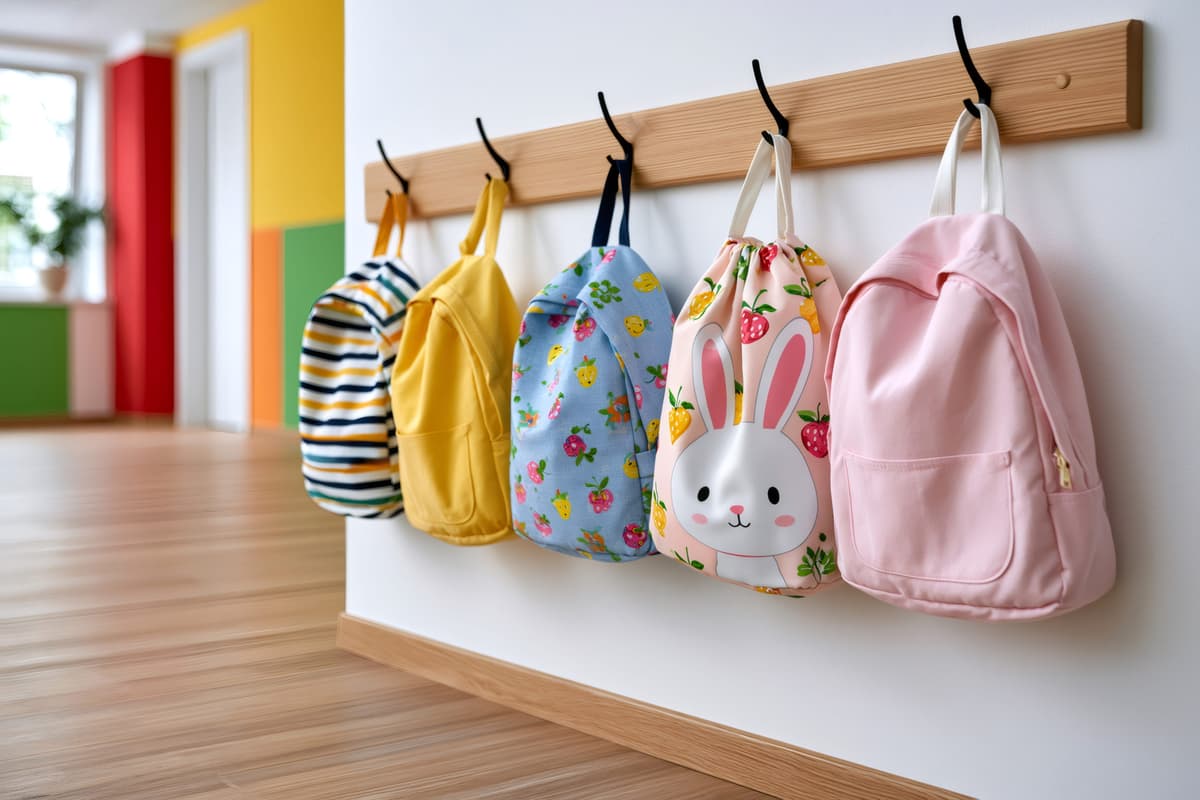
The first day at daycare brings a lot of new things for your child: different rooms, new caregivers, and an unfamiliar daily routine. A well-planned settling-in period at the daycare gives your child time to get to know this environment and build trust. For you, this phase is a chance to get to know the caregivers and daily life at the daycare better.
How the settling-in period works differs from daycare to daycare and also depends on how your child reacts to the new situation.
How does the settling-in period at daycare work?
During the first few days, your child usually visits the daycare together with you or another familiar person. This way, they can get to know the new environment, the other children, and the caregivers at their own pace.
After that, the first short separations usually follow. If your child copes well with the new situation, the time spent at the daycare is gradually extended. Many daycares work with a fixed caregiver during this phase, who accompanies your child through the settling-in process.
The exact process depends on the daycare and your child's needs.
How long does the settling-in period at daycare take?

How much time the settling-in period takes depends on the daycare and, above all, on your child. Many facilities plan for several weeks. On Awina, for example, there are daycares that plan for around two weeks, while others plan for two to four weeks.
Some children settle into the new environment faster. Others need more time to build trust with the caregivers.
That's why it's a good idea to allow enough time between the settling-in period and your return to work. This way, you'll feel less time pressure if your child needs longer to settle in.
What settling-in models are there?
On Awina, you'll find daycares that work according to the Berlin model or the Zurich city model, among others. Both guide the transition step by step, but differ in their structure.
With the Berlin settling-in model, the process takes place in several phases. At the start, the child visits the daycare together with a familiar person. After a few days, a first short separation attempt follows. How the settling-in process continues after that depends on how the child reacts to the separation.
The Zurich city settling-in model is modular and has been adapted to the childcare conditions in Switzerland. Among other things, it takes into account part-time care, very young children, and long care days. The individual modules can be tailored to the specific situation of the child and family.
So when looking for a daycare, don't just ask which model is used. Also ask for an explanation of exactly how the settling-in process works and how your child's needs will be taken into account.
How can you support your child at the start of daycare?

You can actively support your child at the start of daycare. Clear agreements with the caregivers help to organise the first few days well.
It helps if you:
allow enough time for the settling-in phase,
give your child the chance to explore the new environment,
stick to agreements made with the caregivers,
make goodbyes clear and consistent, and
openly discuss any changes or uncertainties with the daycare.
How can you tell that your child is settling in at daycare?
Tears when saying goodbye don't automatically mean that the settling-in process isn't working. What matters more is how your child behaves after the separation.
Can they increasingly be comforted by a caregiver? Do they play, explore the rooms, or reach out to other children? This can be a sign that they're gradually building trust in the new environment.
If your child remains very distressed over a longer period of time, you should talk to the daycare. Together, you can discuss whether the settling-in phase needs more time or a different approach.
Finding the right daycare for a good start
On many daycare profiles on Awina, you'll find information about the settling-in process, the pedagogical concept, and the caregivers. With the daycare comparison, you can compare suitable daycares and find out about their care offerings.
Once you've found the right daycare, you can send a place request directly.
Do you have questions about finding a daycare? Get in touch with Awina and we'll be happy to help.